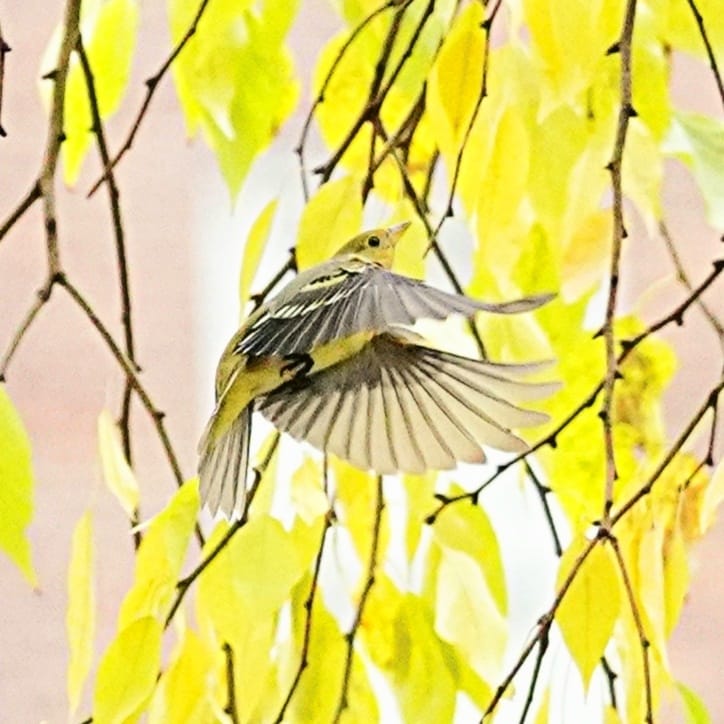
Western Tanager (photo by Lucas Urbe)
WHAT’S IN FLIGHT – CARL SCHURZ PARK, NYC
Carl Schurz Park is many things to many people, but to birds it is a capacious boarding house. Some live here permanently, but a vast majority are migrants moving through. In spring, no sooner have the first daffodils budded and frothy white blossoms stippled the trees than it is all change in the ’boarding house’. Some birds leave; like our famous little Western Tanager, Aurora, (she is bright yellow with an orange beak), who after over wintering here, flies off. Where? Well, no one knows, but the best guess is to join the rest of her species in California or Western Canada.
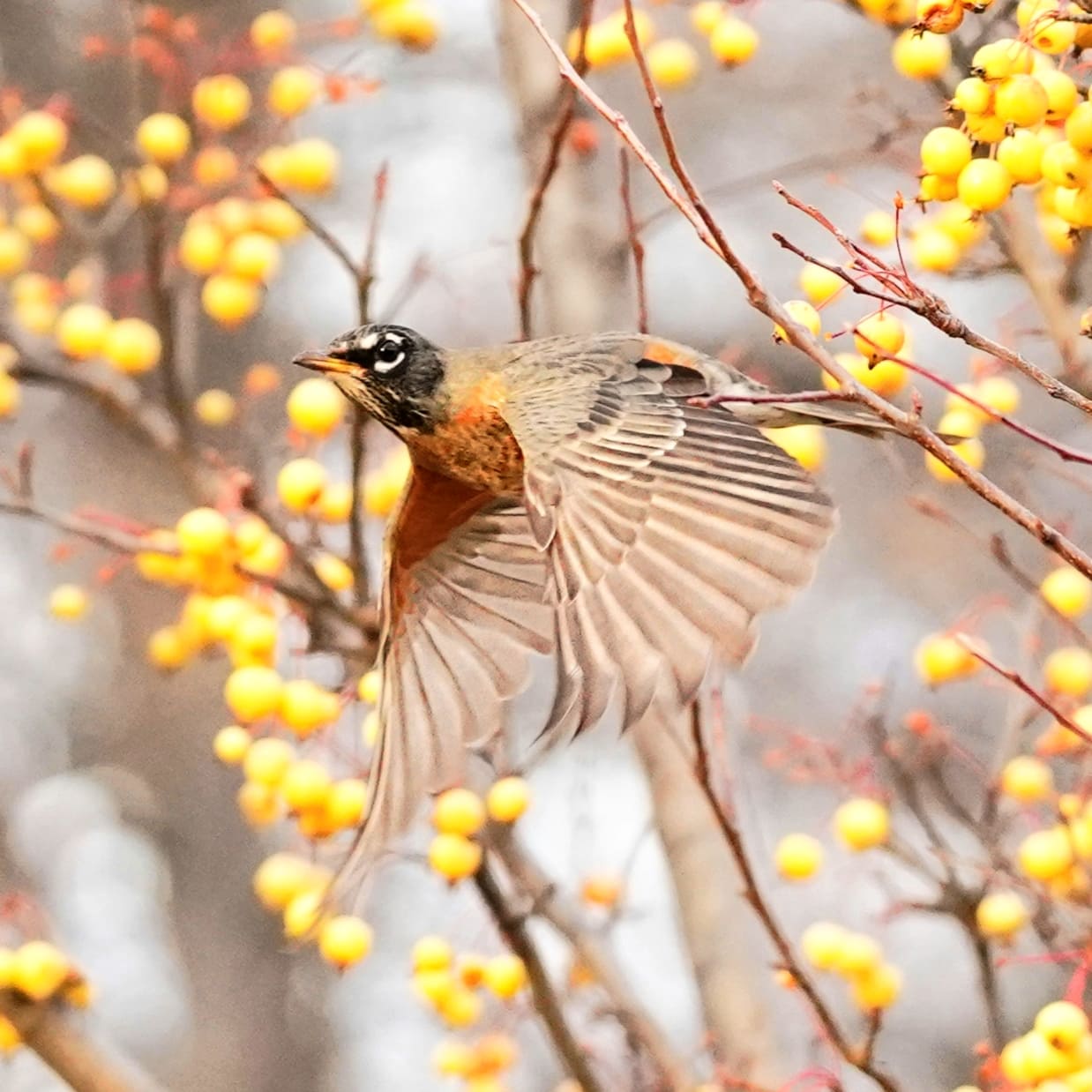
American Robin (photo by Lucas Urbe)
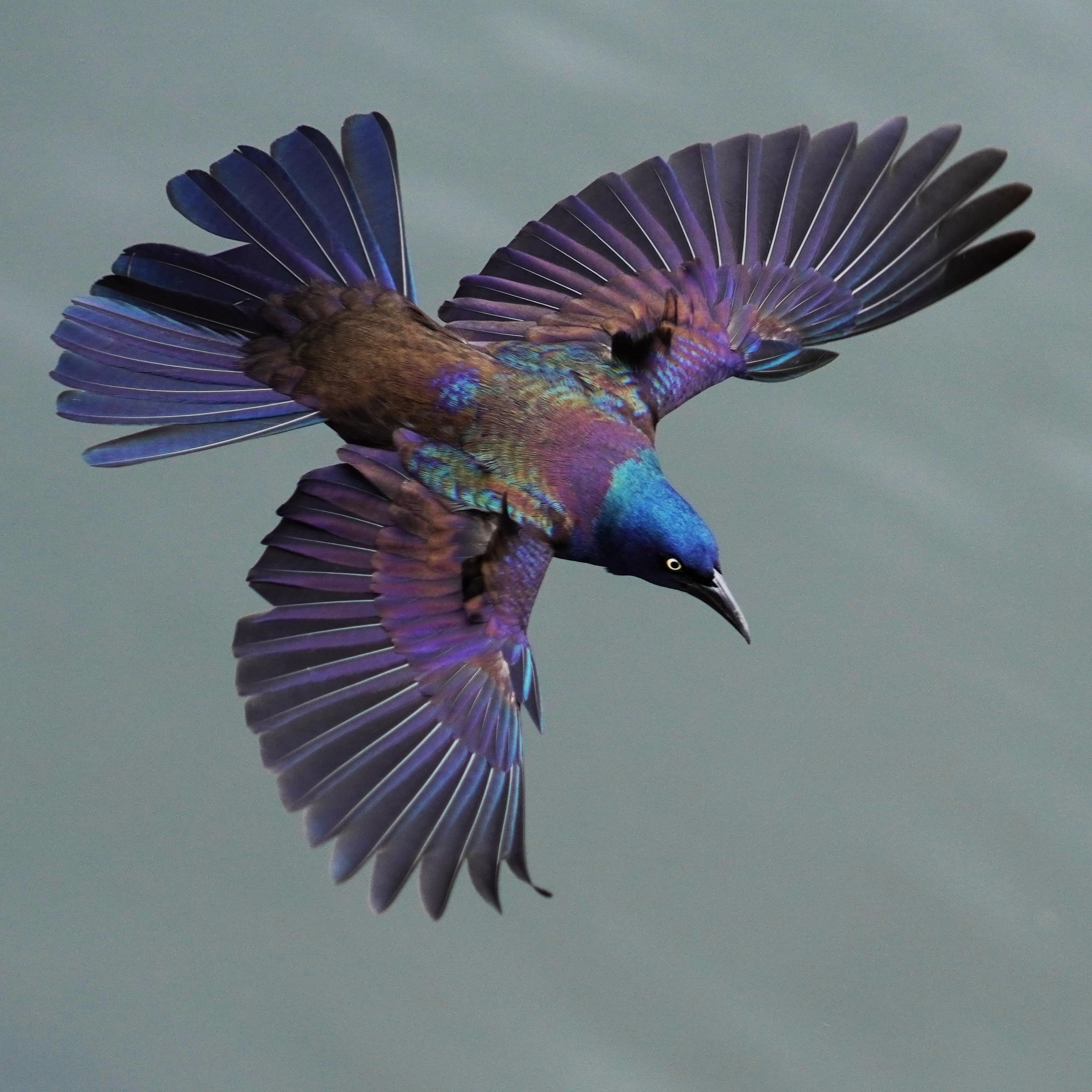
Common Grackle (photo by Lucas Urbe)
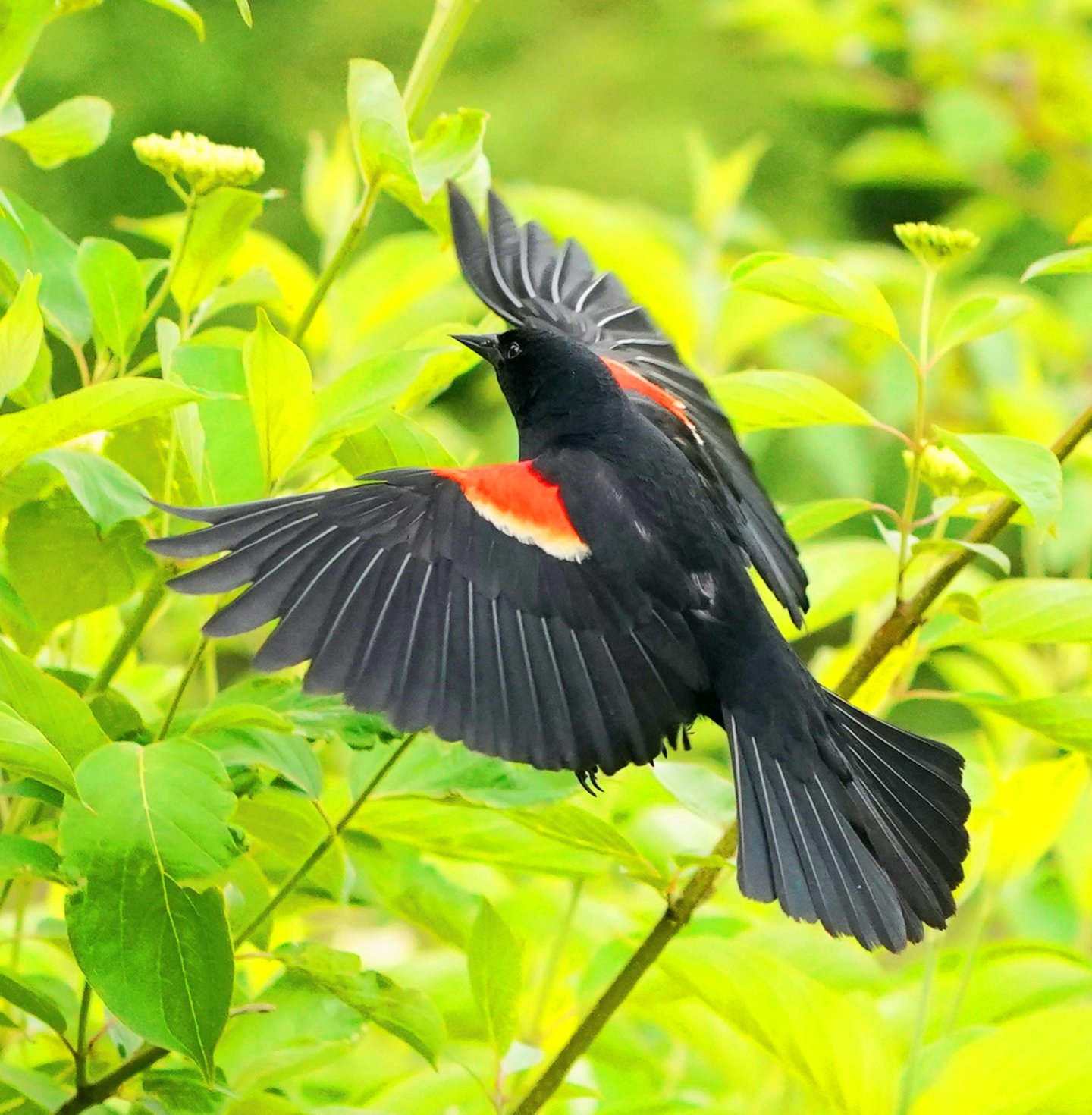
Red-winged Blackbird (photo by Lucas Urbe)
Incoming in mid-March are the American Robins, Red-winged Blackbirds and Common Grackles. They will stay through the summer and depart in the fall. They’re here to mate, build nests and hatch their chicks. ‘Most American Robins over winter in Florida,’ says Kevin McGowan, an ornithologist at The Cornell Lab of Ornithology and founder of the popular All About Birds website. ‘The males that arrive here first get the best territory to nest, and they get rewarded with several mates and can breed several times.’ One of the pitfalls of arriving early is the yo-yo March weather. ‘Some years the Red-winged Blackbirds get killed by the snow,’ he says.
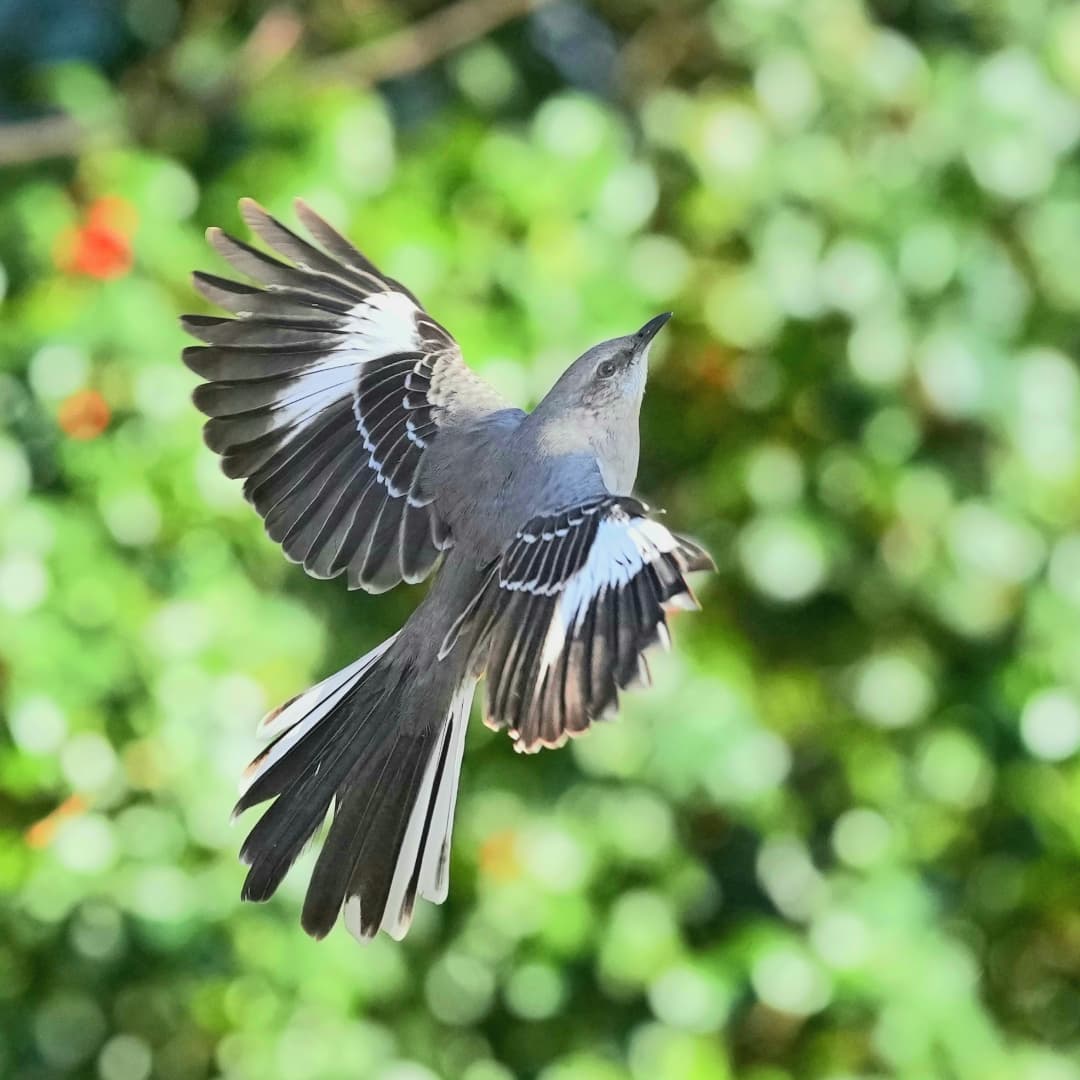
Northern Mockingbird (photo by Lucas Urbe)
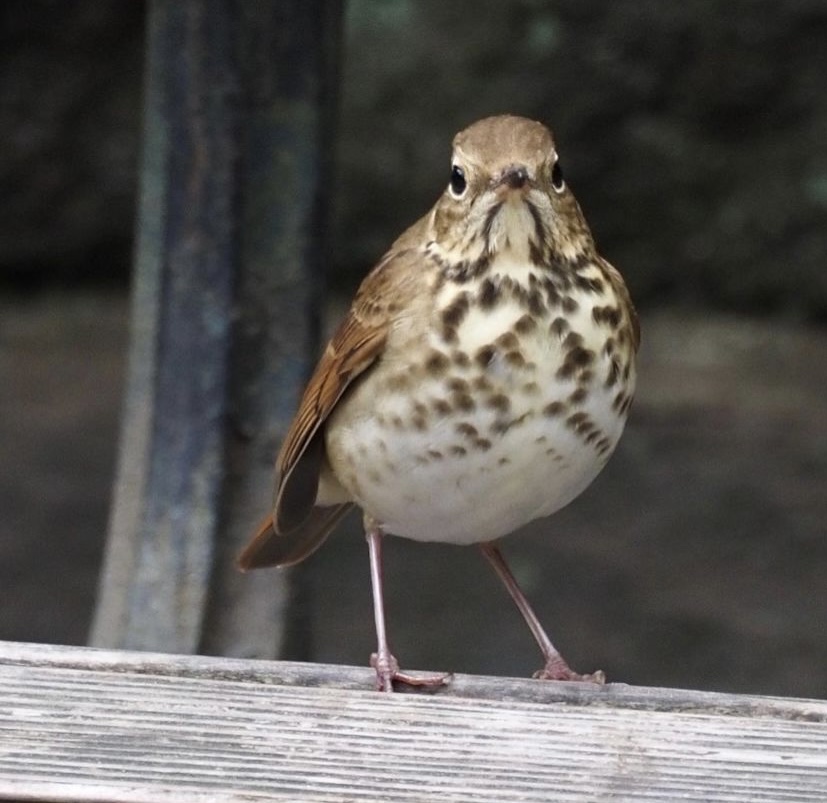
Hermit Thrush (photo by Jay Zemann)
American Robins are members of the Thrush family; famed for their beautiful song. Carl Schurz Park is blessed with several spectacular singing birds, including Hermit Thrushes (as the name suggests they’re part of the Thrush family), Carolina Wrens, Northern Mockingbirds, (who can have over 200 different songs in their repertoire) and the Gray Catbird, who can trill away for up to 10 minutes at a time. Instead of a larynx, like humans, birds have a syrinx, which lets them produce two different sounds simultaneously. Birds sing for various reasons, but in spring it is predominantly to attract a mate and protect their nesting territory.
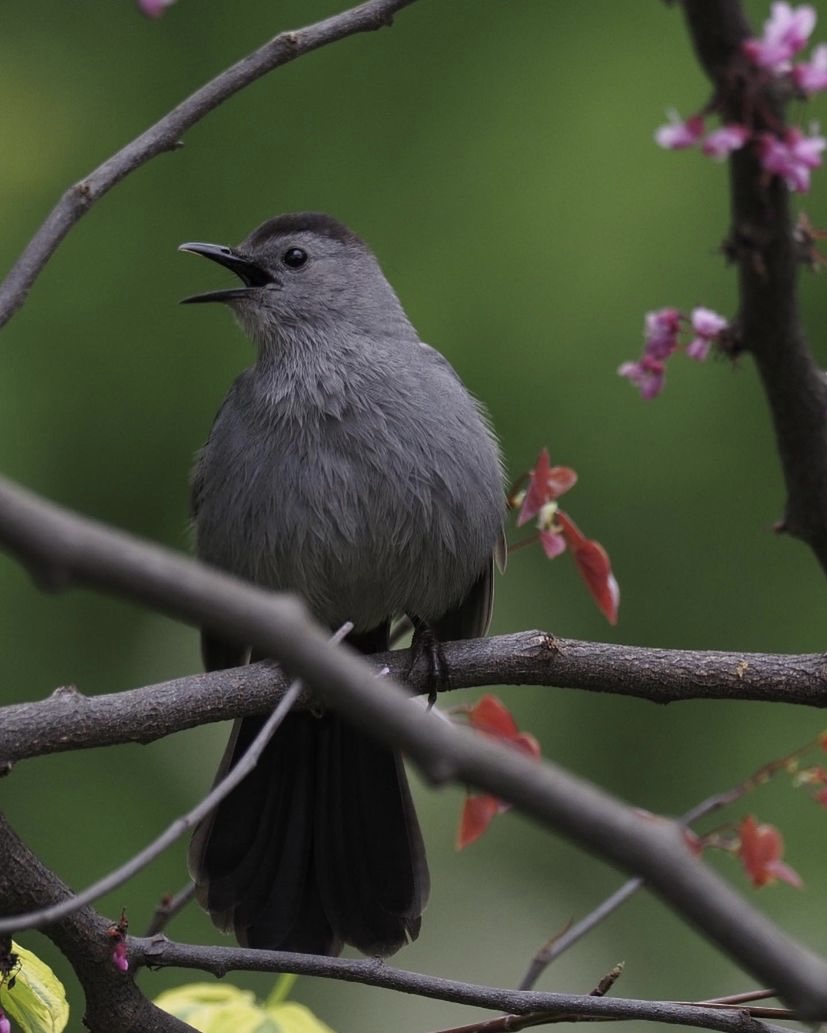
Gray Catbird (photo by Jay Zemann)
Mid April to the end of May is the time of peak spring migration. Each day brings new arrivals and departures of warblers; the bird jet set. These tiny jewel-colored songbirds from Mexico, the Caribbean, and South America fly thousands of miles north up the East Coast and over the city each night. Many drop down into our park for a day or two – and sometimes for up to a week. They feed and rest, gathering strength for their often arduous journey onward to their breeding grounds, some as far afield as Canada and Alaska. ‘A lot of birds migrate by hugging the coastline. It is a landmark for them to follow, so green space beside the water, like Carl Schurz Park, is especially important,’ says local ornithologist, Gabriel Willow.
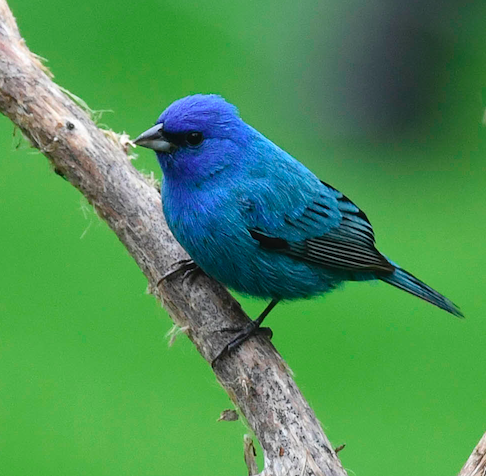
Indigo Bunting (photo by Deborah Bifulco)
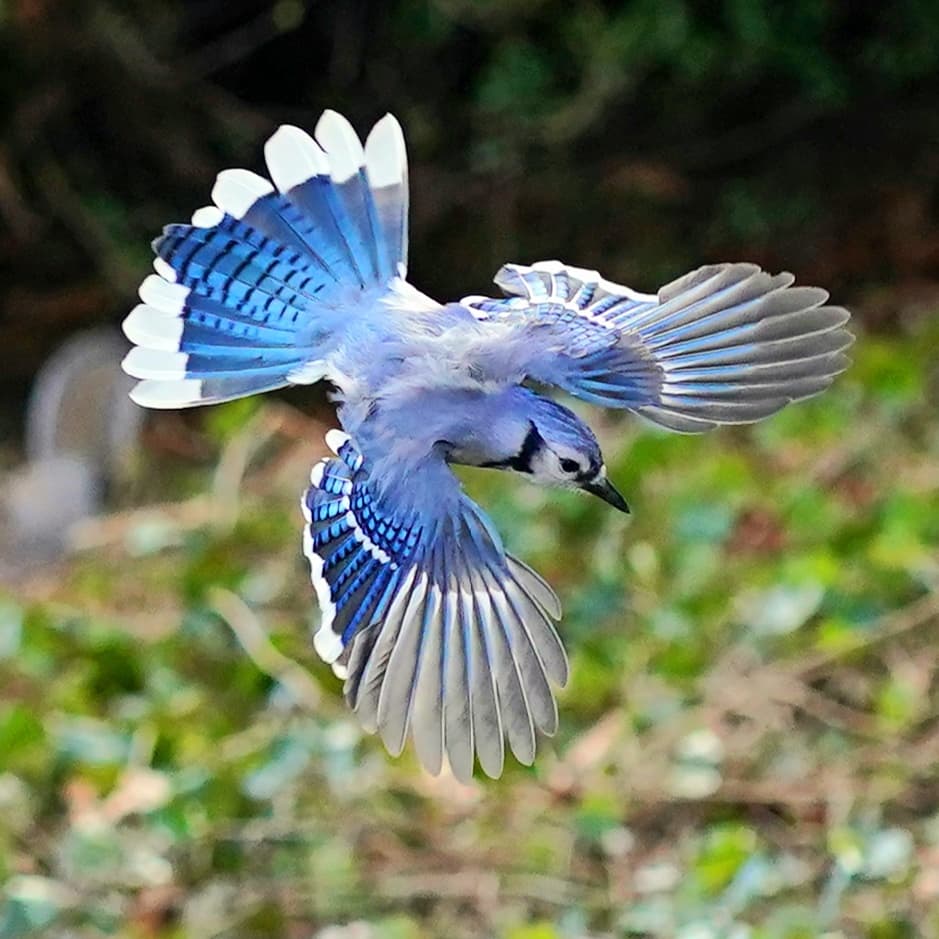
Blue Jay (photo by Lucas Urbe)
During peak migration. in the hours between dawn and mid morning, or late afternoon, it’s often possible to catch a glimpse of the migrants in the trees and shrubs in the park; blue could be a tiny Indigo Bunting, a Black-throated Blue Warbler or a Blue Jay (who is a year round native); a flash of orange could be a Baltimore Oriole; red could be a Scarlet Tanager, a Rose-breasted Grosbeak or even one of our year round Northern Cardinals who nest in the park; but yellow is almost always one of the abundant yellow-colored warblers.
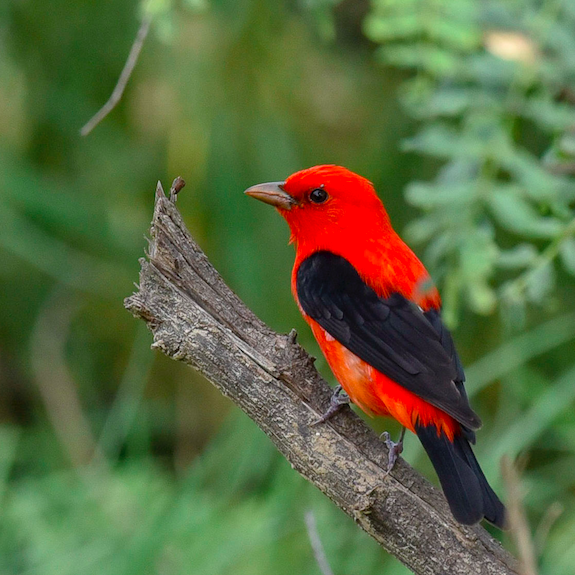
Scarlet Tanager (photo by Deborah Bifulco)
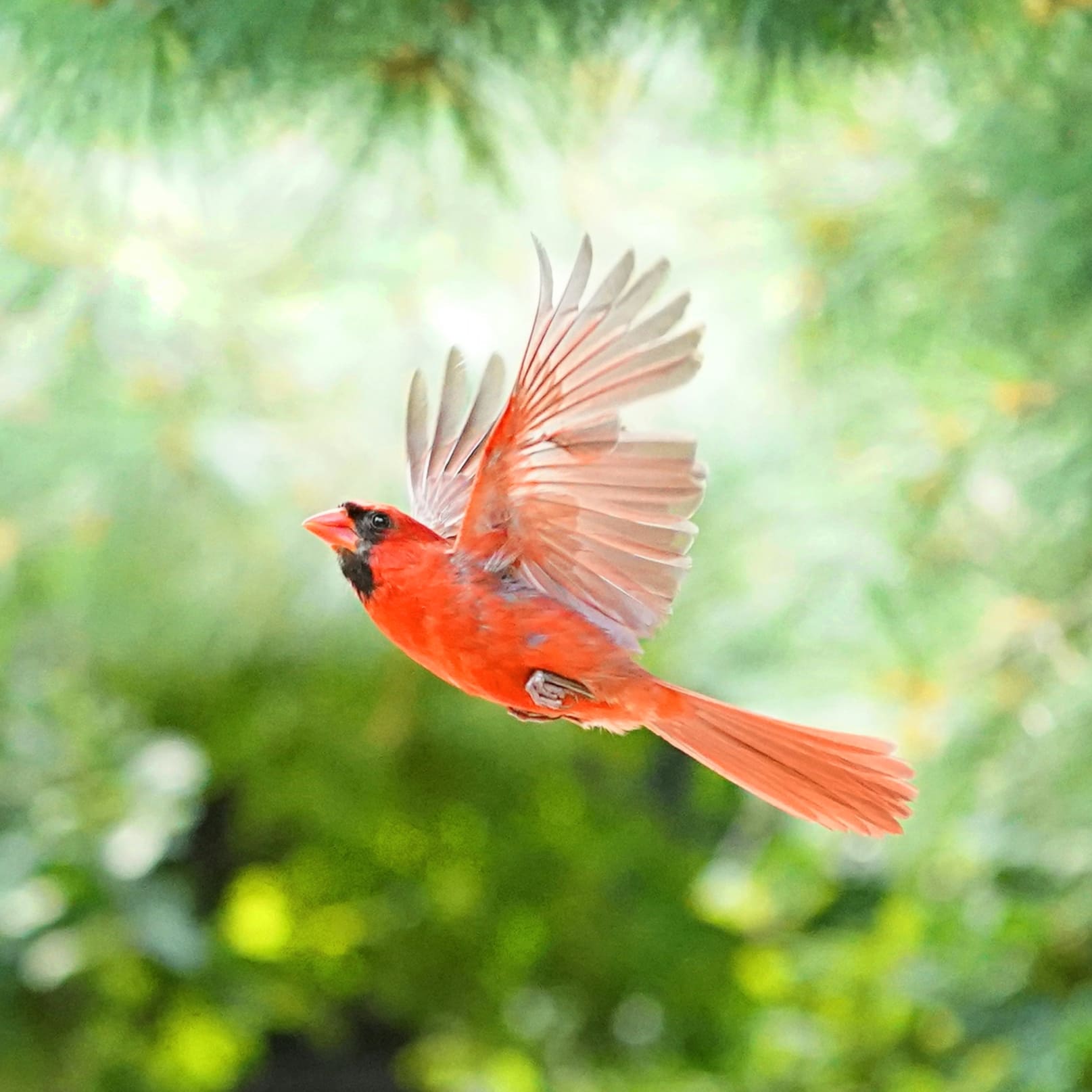
Northern Cardinal (photo by Lucas Urbe)
Birds’ nests are nearly impossible to find with the naked eye, or even binoculars. Most are just too tiny and well concealed. The Yellow Warbler, which over summers in Manhattan, builds a nest the size of a shot glass. It is often fairly close to the ground, but decorated on the outside with spider’s webs and cattails to conceal it, says Robyn Bailey, Project Leader of NestWatch at The Cornell Lab of Ornithology. Birds use all sorts of surprising materials to build nests, she says. It’s not just sticks and leaves. ‘Bits of clothing, yarn, horsehair, dung, plastic bags are some of the more unusual materials. ‘Birds will steal fur off animals’ she says. ‘I’ve seen Tufted Titmice harass dogs, foxes and raccoons. They use the fur to line their nest.’
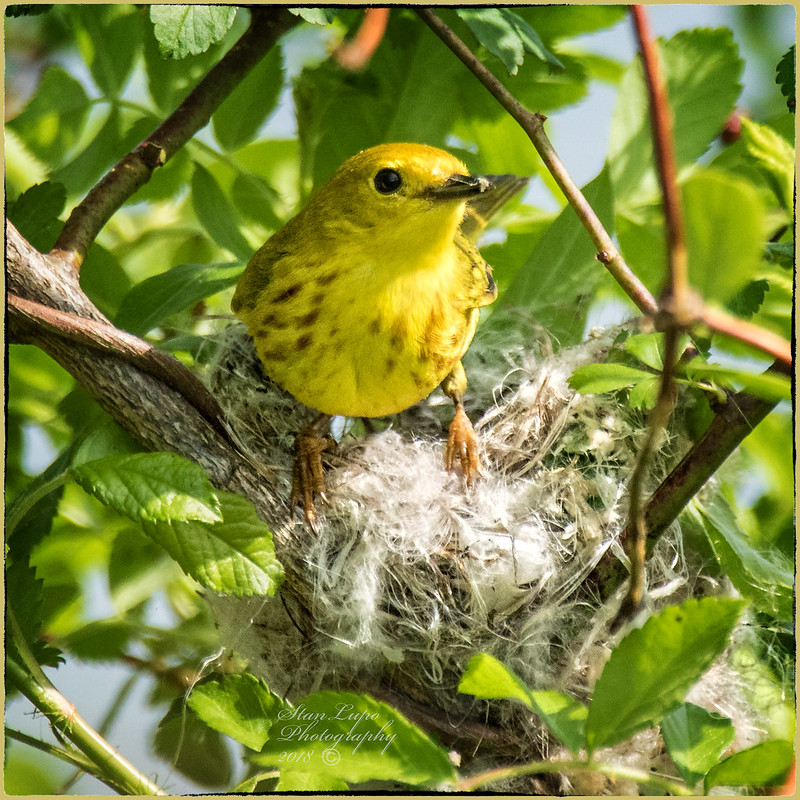
Yellow Warbler on the nest (photo by Stan Lupo)
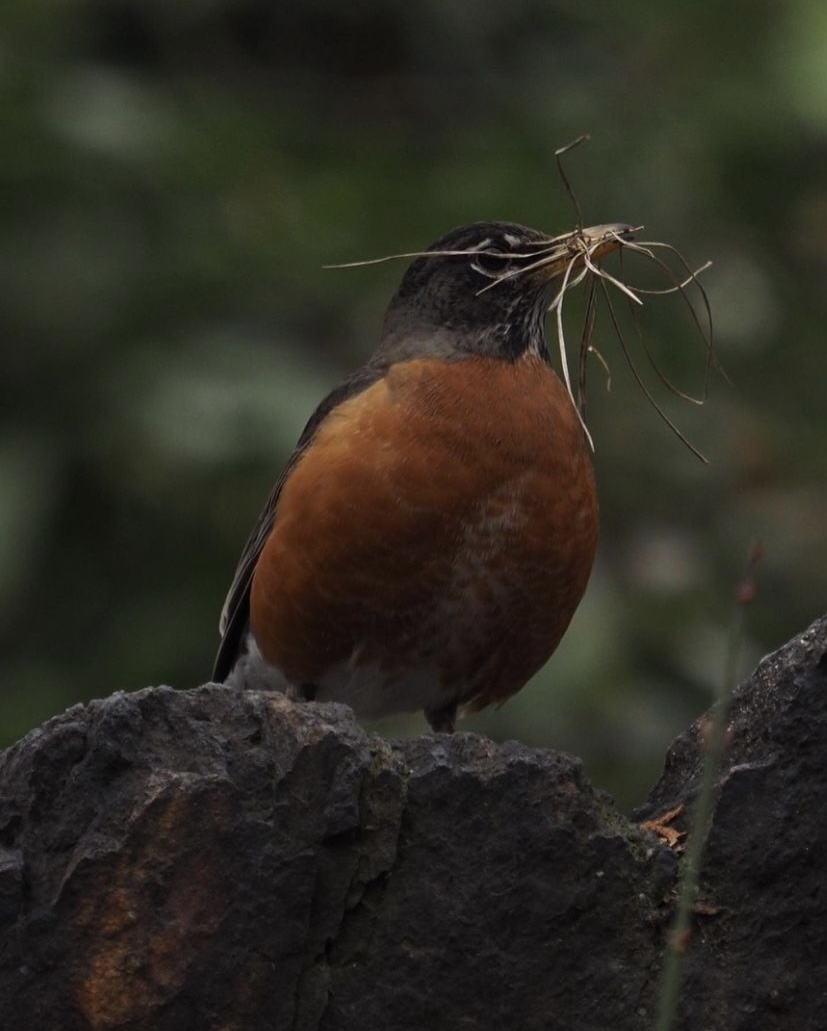
Robin with nesting material (photo by Jay Zemann)
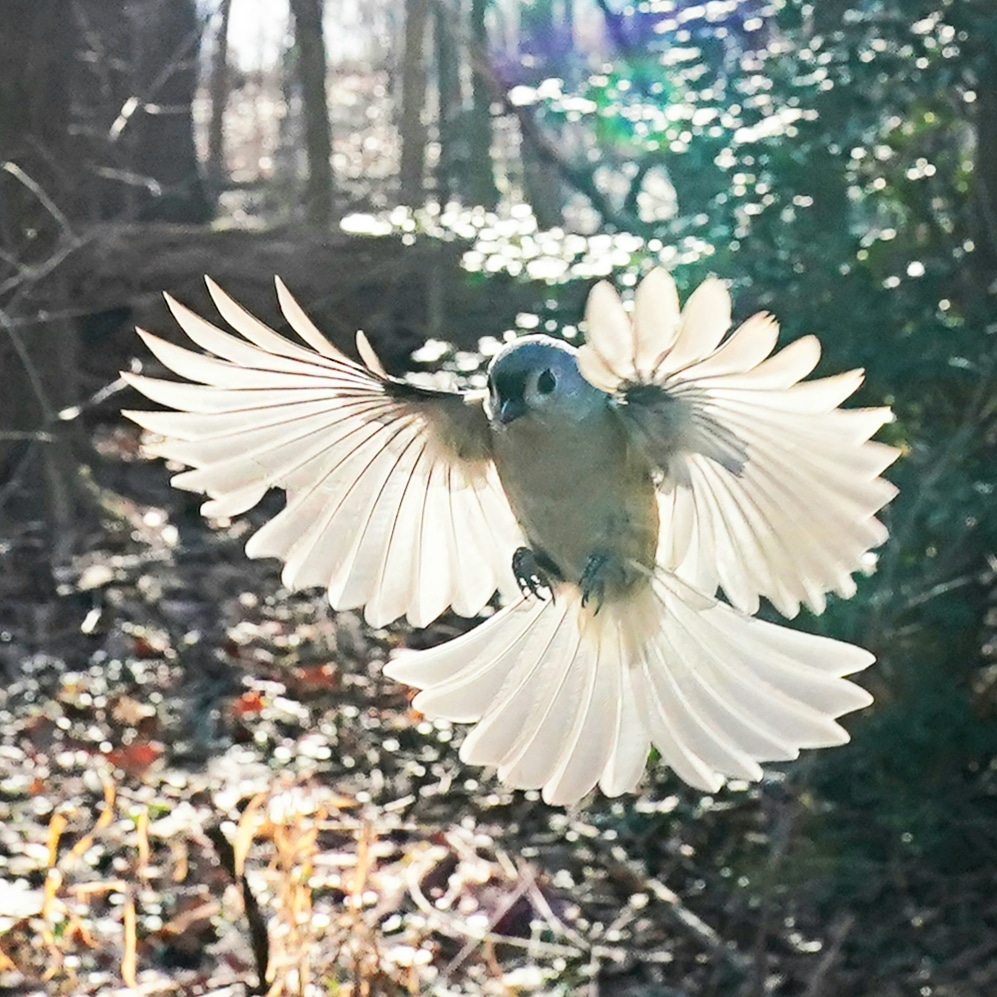
Tufted Titmouse (photo by Lucas Urbe)
For the last couple of years, a Gray Catbird pair has nested in the shrubs along the boardwalk near the Mayor’s Mansion. The Gray Catbird is one of Robyn’s favorites because of its vibrant teal colored eggs. The only visible signs that they are nesting nearby is a glimpse of this slim gray bird with its signature black cap darting into the bushes, or sitting in a nearby tree singing.
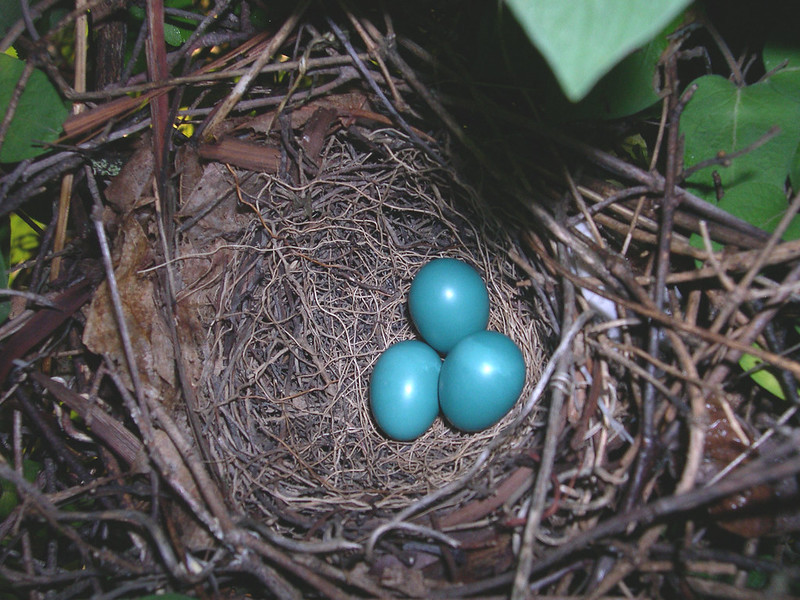
Gray Catbird’s eggs (photos by Dennis Murphy)
Barn Swallows, with their deep blue wings, backs and forked tails and cinnamon colored underparts, arrive in mid spring and can be seen swooping over the park and zigzagging above the East River. These acrobatic birds feed on the wing, snatching insects out of the air, as high as 100 feet off the ground. They are often seen nipping in and out of the rocks that make up the seawall around the eastern perimeter of the park and under the East 90th Street Ferry terminal, where it is thought they nest. ‘Barn Swallows like overhead cover when they nest, so they like the rafters in barns. But it could be under a dock, or a rocky overhang.’ says Robyn. ‘They build their nests out of mud pellets. They pick it up with the mouth and use their bill like a tool to spackle it onto the nest, then they line it with grasses, feathers, horse hair and soft materials.’
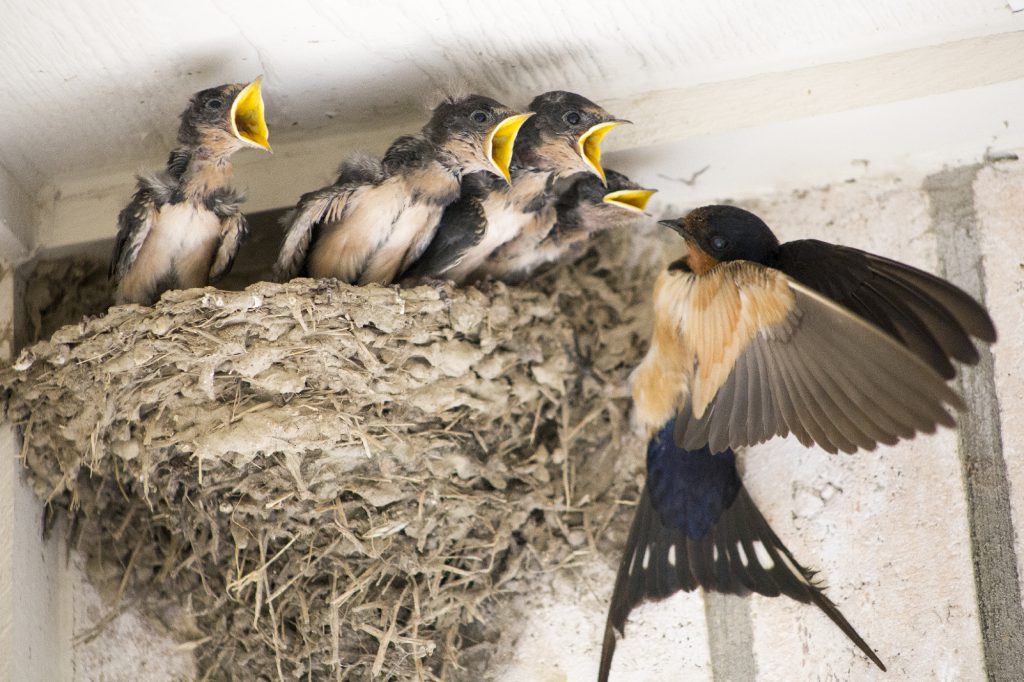
Barn Swallow nest (photo by Wayne Hartman via NestWatch)
It is a common misperception that a bird’s nest is its home. Nothing could be further from the truth. ‘The nest is just a bowl for babies,’ explains Kevin McGowan. ‘Young birds get out as soon as they can. It’s too dangerous to stay in. Predators like raccoons know where all the nests are. They go around methodically checking the trees and shrubs. [Feral cats, hawks and owls also prey on small birds]. Two thirds of all songbirds get eaten before they leave the nest,’
Once the babies have gone, what remains behind is often a disintegrating mess of feces and parasites. ‘Cormorants are one of the few birds that will take up their old nest if hasn’t blown apart,’ says Robyn Bailey. One of the biggest cormorant nesting sites in the city is visible from the north end of the park. Mill Rock is a tiny T-shaped island, a few hundred feet away across the water; between our park and Randall’s Island. In late spring, Mill Rock’s trees are festooned with Double-crested Cormorant nests made from sturdy sticks and branches, some as big as three-feet wide.
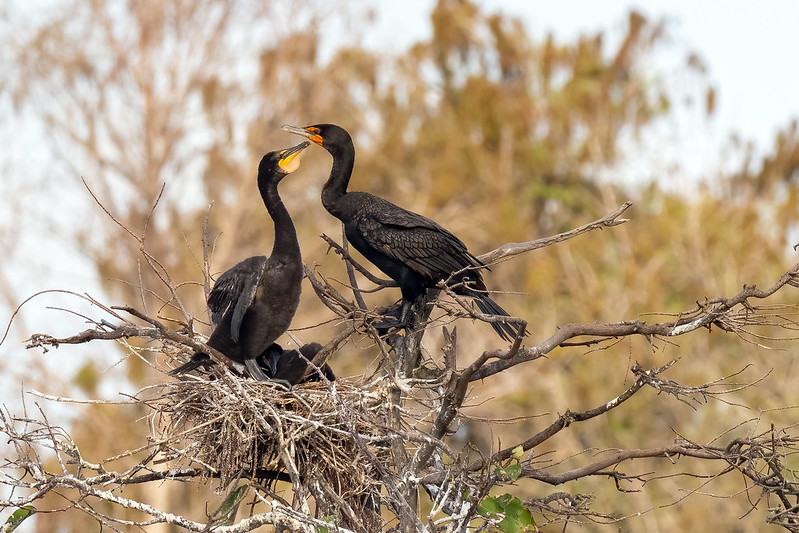
Double-crested Cormorant’s nest (photo by Mick Thompson)
Double-Crested Cormorants are large prehistoric-looking birds with bright blue eyes, orange throats and dramatic black wings. They are the most efficient marine predators in the world. They can sometimes be seen standing in the park or on the rocks beside the seawall, with their wings outstretched drying in the sun. They have less preen oil than other birds, so their feathers can get soaked when they are diving and fishing. These birds are colony nesters for safety. They also like to line their nests with seaweed and are not averse to salvaging human cast-offs like rope, fishnet and deflated balloons.
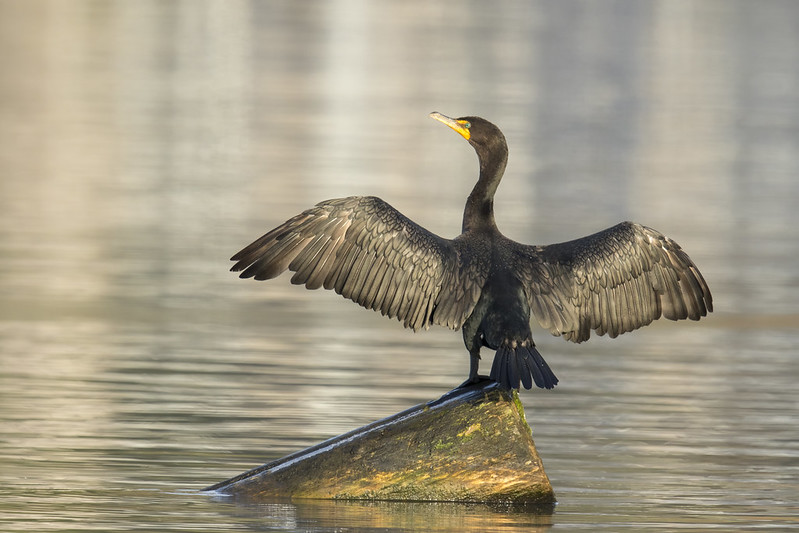
Double-crested Cormorant (photo by Mick Thompson)
If a bird’s nest isn’t its home, where do they sleep at night? Our Western Tanager spent her nights in Carl Schurz Park perched in a yew tree along the Long Berm. ‘Many birds roost together in the trees, shrubs and on the ground for protection and warmth. Others seek out crannies in buildings or a ledge next to a building,’ says Kevin McGowan. ‘Birds have tendons that lock the toes onto the branch when they sleep, so they don’t fall off.’
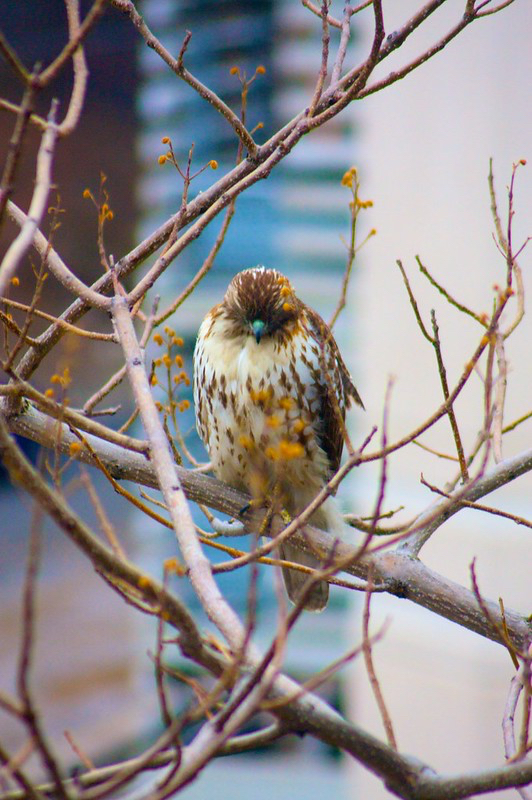
Red-tailed Hawk sleeping (photo by Raja Sambasivan)
Birds can nap day and night for just a couple of minutes at a time. Like mammals, they do have REM (Rapid Eye Movement) sleep and Non REM sleep, but both cycles can be super fast ‘REM sleep is about nine seconds and Non REM is about two and a half seconds,’ writes Daniela Ogden of the California Audubon Society. Birds can also nap with one eye open. It is called unihemispheric sleep, which allows them to shut down one side of the brain and keep the other side active and alert for predators. Birds certainly don’t need eight hours sleep like humans. ‘We have nest cameras that are on all night pointing at birds all season long,’ says Robyn Bailey. ‘What we’re seeing is the birds are often awake at night, most have their eyes open watching over their young.’
With thanks …to!
The amazing bird photographers – Lucas Urbe, Jay Zemann, Mick Thompson, Deborah Bifulco, Stan Lupo, Dennis Murphy, Raja Sambasivan & Wayne Hartman
Lucas Urbe‘s photos of birds in flight can be seen on X (formerly Twitter) @romannewyork and on Instagram @domiziano88
Jay Zemann‘s bird photos from Carl Schurz Park can be seen on Instagram @josephzemann
The kindly ornithologists & scientists who helped make this story possible –
Kevin McGowan – The Cornell Labe of Ornithology
Robyn Bailey – Project Leader of NestWatch at the Cornell Lab of Ornithology
Gabriel Willow – ecologist & naturalist
& especially..to!
Carl Schurz Park Conservancy for the foresight to create the first park conservancy in New York City in 1974; for caretaking not only the plants and trees but also the birds & insects; for letting me explore the world of ‘What’s in Flight’ (birds, bees, moths, butterflies, fireflies and other insects) in the park; and for the most amazing pocket park in the city (designed by Maud Sargent in 1939).
 Lucie Young