New York Times
British Country House Hotels, Without the Folderol
The Pig boutique hotels offer a casual take on the country house experience, with local food and muddy boots. They’ve just opened two new spots in the Cotswolds.
When the British hotelier Robin Hutson, 67, took a paint brush to a vintage painting in one of his Pig hotels and replaced the man’s red riding jacket with a less showy brown one, he transformed the huntsman from a posh toff into a rural farmer in one swoop.
‘We call it Pigification,’ said Judy Hutson, 71, Mr. Hutson’s wife and the creative director of the Pig Group, a collection of ten country house hotels known for their easygoing charm.
Two new Pigs are opening in quick succession this year in the 790-square-mile Cotswolds National Landscape, the largest protected Area of National Beauty in England, Wales and Northern Ireland, making a total of nine hotels and the first pub in the group, all dotted around the south of England.

© Jeremie Souteyrat
Each Pig is carefully chosen for its location. The two new venues, the Pig in the Cotswolds, which just opened and the Village Pub, which opened in June, are just a few paces apart in the picture-postcard village of Barnsley. Within a 30-minute drive are William Morris’s Kelmscott Manor, Diddly Squat Farm (owned by Jeremy Clarkson and featured in the TV series Clarkson’s Farm) and the Roman town of Cirencester. Also nearby are three of the most beautiful and touristed villages in Britain; Bourton-on-the-Water, Stow-on-the-Wold and Bibury.
The Hutsons chose the Pig name to suggest rural charm rather than the usual fancy country house sobriquets like ‘manor’, ‘house’ or ‘park’.
When the first Pig opened in 2011, I wanted to deformalize the country house hotel,” Mr. Hutson said.
“People were afraid to go up the driveway,’ Mrs. Hutson said. “They were scared it was going to be expensive. It was all white glove service and people in suits.“

© Jeremie Souteyrat
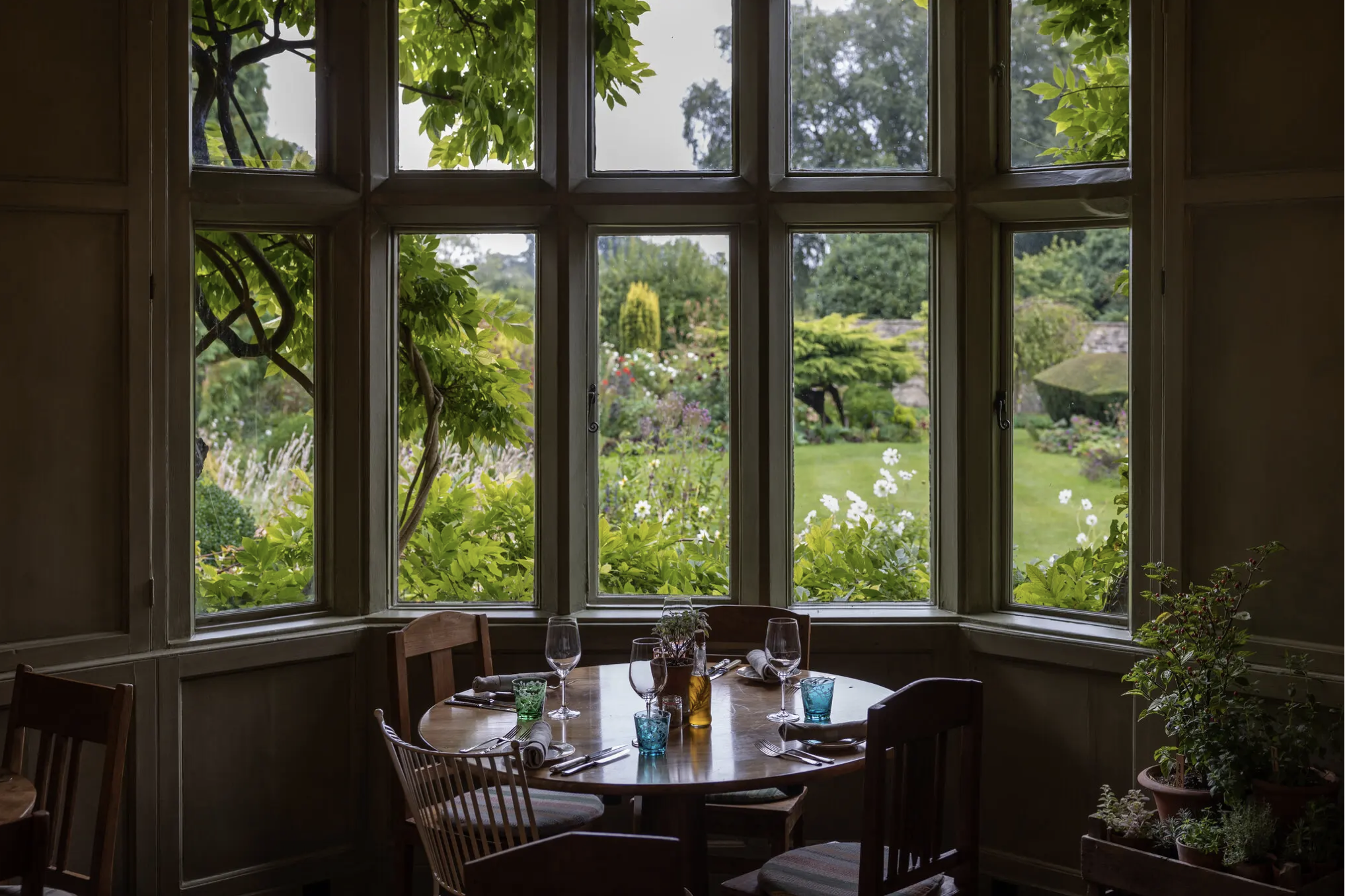
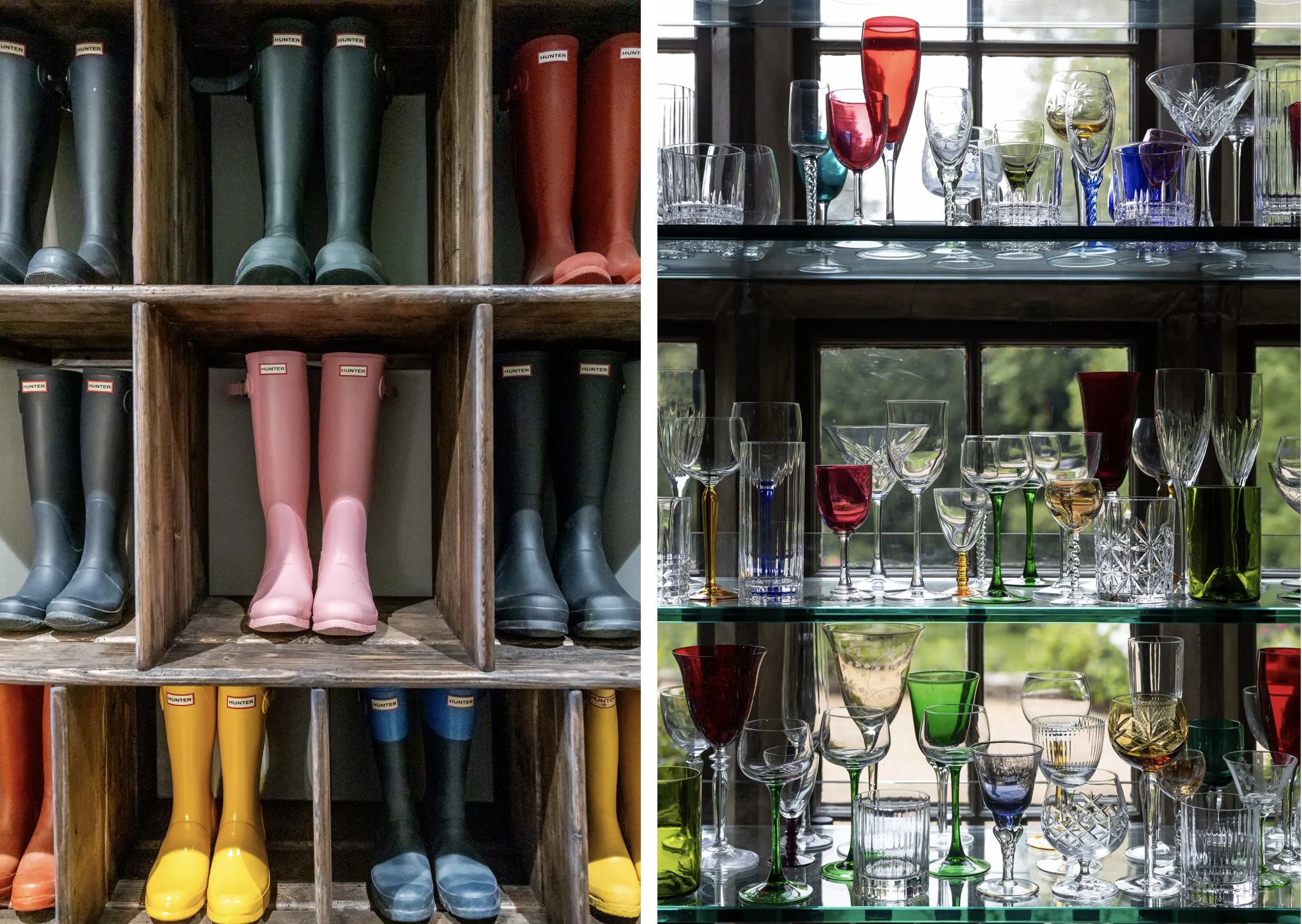
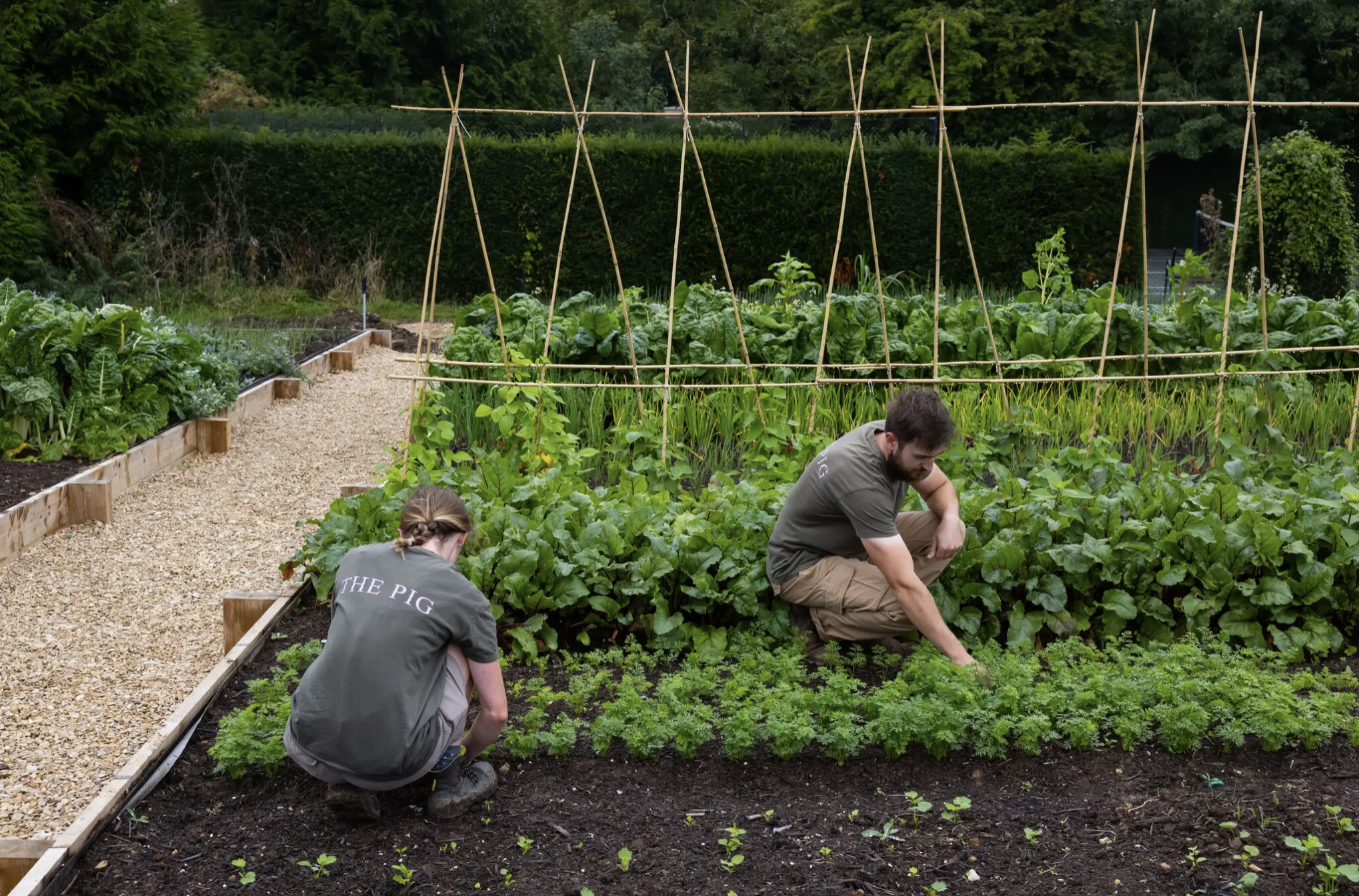
The Pig hotels avoid all the usual country house folderol: no Michelin-starred restaurants, croquet lawn, poolside champagne, or golf courses. Instead, guests get to play house in beautiful 17th-,18th– and 19th-century buildings and eat affordable, tasty food from ingredients mostly grown on the property or sourced within a 25-mile radius.
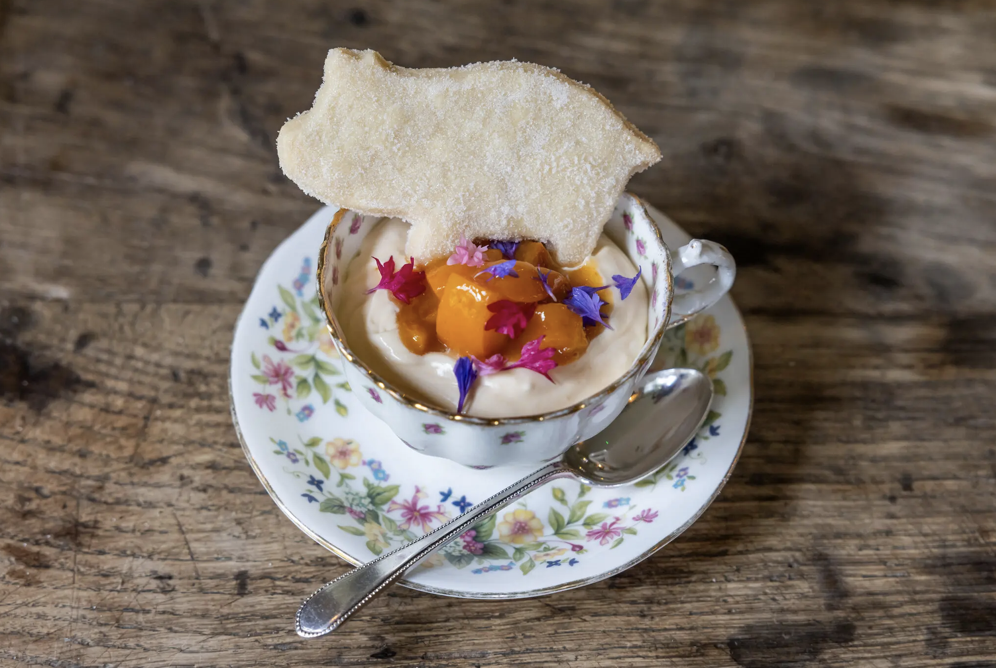
At the Cotswolds Pigs, I ate overnight lamb from a nearby farm, homemade ice-cream with nectarines and raspberries from the hotel’s garden and drank Pinot Precoce from award-winning Cotswolds winemaker Woodchester Valley.
© Jeremie Souteyrat
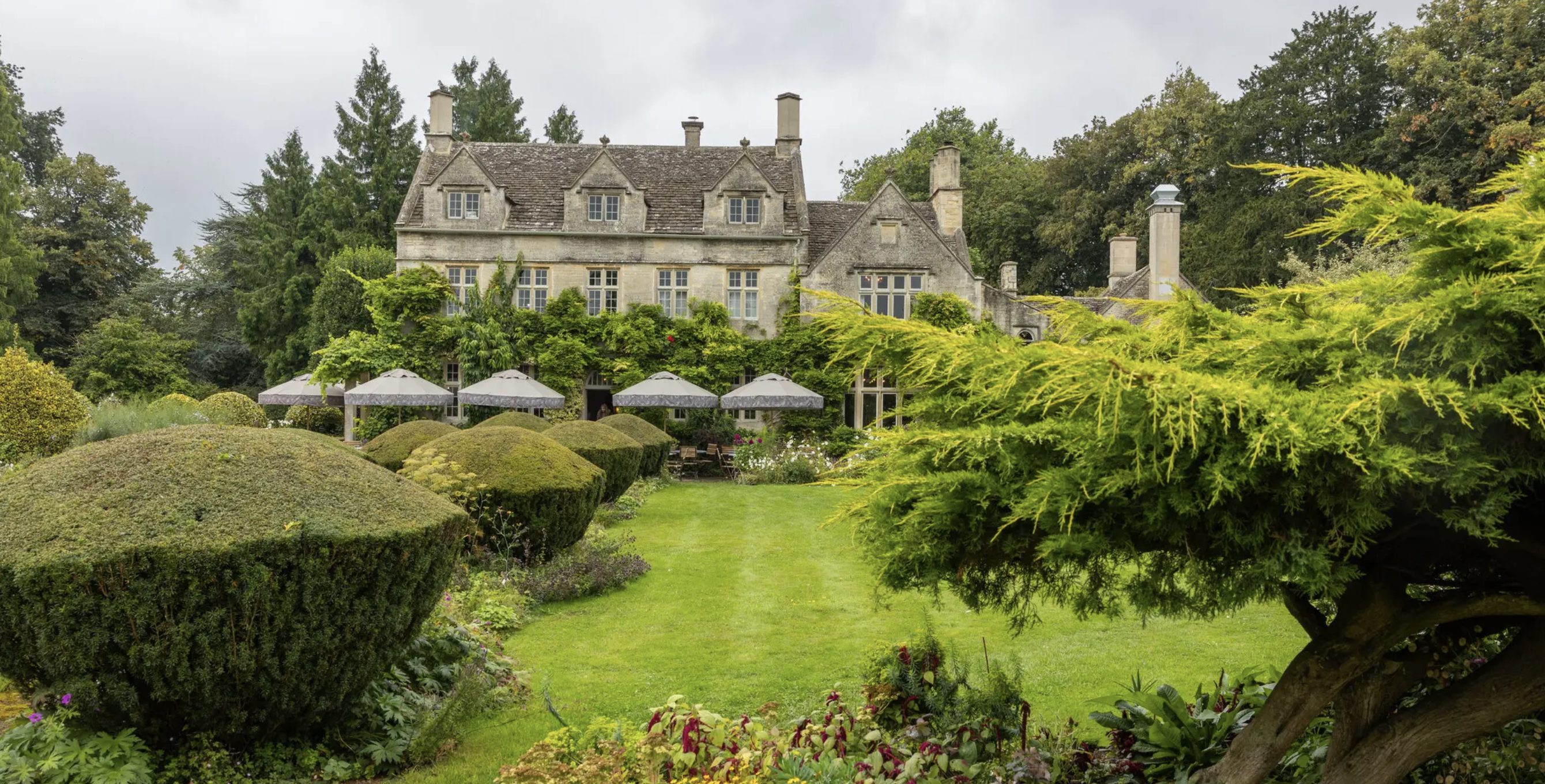
The Pig in the Cotswolds is on the National Heritage List for England. A three-story 1697 house, built for the local squire, it later became the home of Rosemary Verey, one of Britain’s foremost garden designers. She helped King Charles III with the gardens at nearby Highgrove and created gardens for Elton John.
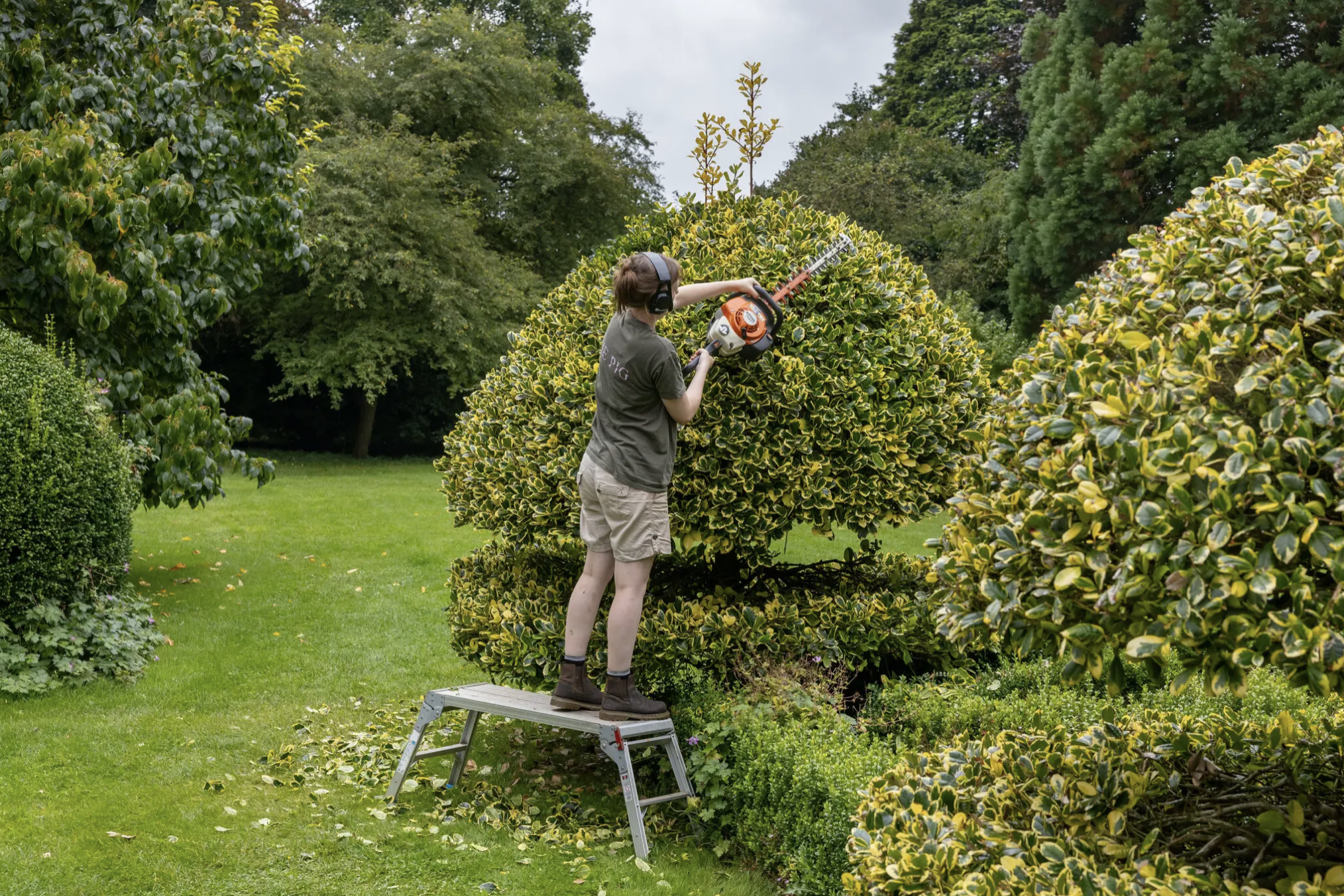
Verey died in 2001, but her four-acre, romantic vision (picture a walkway draped with clusters of yellow laburnum, blousy roses, knotty hedges and little architectural follies) lives on, preserved by the head gardener for the hotel’s ornamental gardenes Jen Danbury.
© Jeremie Souteyrat
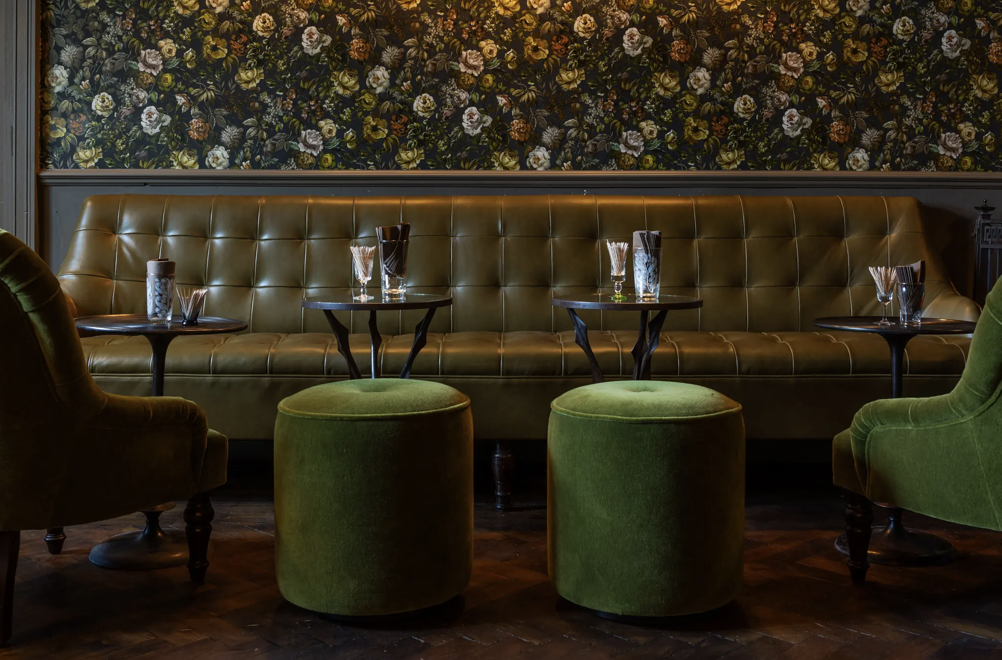
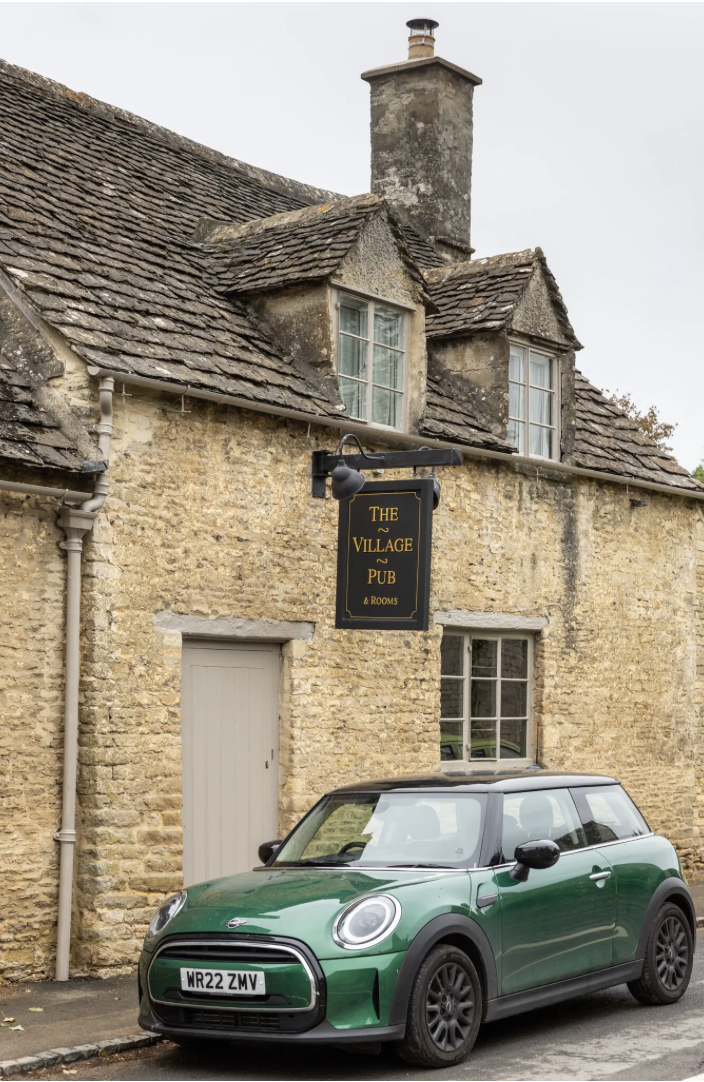
A local pub, dating back to the early 1700s, was part of the package when the hotel group bought Rosemary Verey’s house. The Hutsons describe it’s new look as “Dickensian”: Low beams, darkly lit nooks, roaring fires and six bedrooms with sumptuously provisioned beds scowled over by oil paintings of crabby-looking characters.
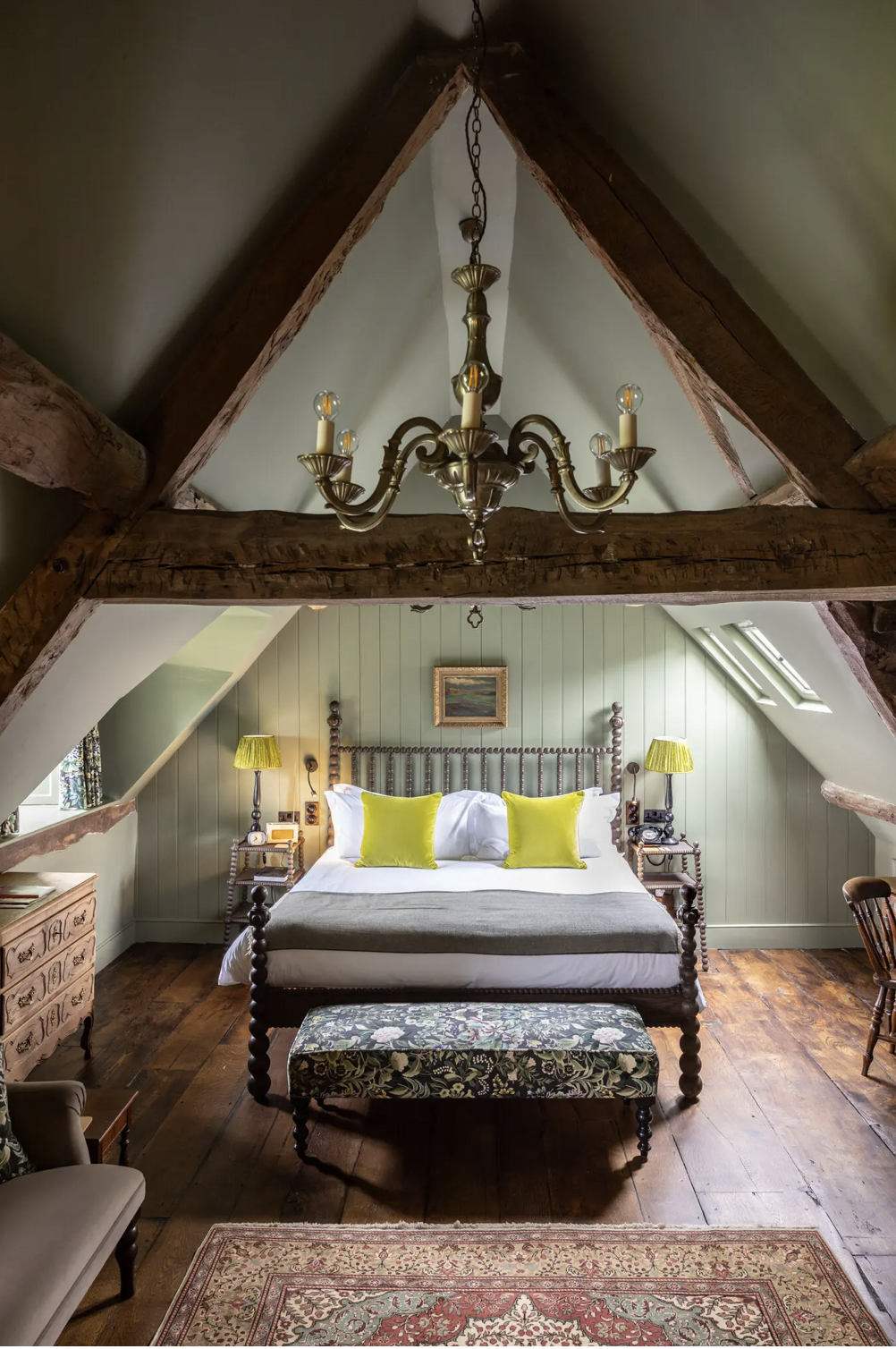
For her Pig interiors, Mrs. Hutson manipulates a huge orchestra of paint colors, wallpapers and fabrics. Many of her design elements are playful and unexpected: huge pink baths in two of the grandest rooms at the Pig in the Cotswolds; curtains like string vests that hang in the spa, “to give some privacy but not block the views,” and Moon Garden Midnight wallpaper by House of Hackney in the public toilets, which depicts flowers with eyes and moon creatures dancing in the foliage.
© Jeremie Souteyrat
Mrs Hutson’s design career started in 1994, when Mr. Hutson asked her to do the interior for his new Hotel du Vin brand (town house hotels in the provinces noted for their excellent wine lists and food). Her background was as an occupational therapist for psychiatric patients at a London hospital. Fortunately, that experience did teach her about the psychology of space and color and how each affected the patients; what calmed them and made them smile.
Guests often get so comfortable at the Pigs, they throw their dirty hiking jackets over the chairs and put their feet up in the lounges. Sometimes to the irritation of their hosts. “I’ll think, ‘You don’t you know how much that fabric cost,'” Mrs. Hutson said.
© Jeremie Souteyrat
Often the most popular stays at the hotels are the eccentric outbuildings. At the Pig in the Cotswolds, there is a room in a potting shed, seven in the stable yard building and an entire cottage that sleeps eight. If demand is high the Hutsons will add Shepherd’s Huts (wagons on wheels big enough to hold king beds and en-suite baths) to the eight acres of farmland, which already includes a large vegetable garden, an apple orchard, berry bushes, bee hives and chickens.
The Hutsons are planning to retire at the end of the year, leaving Tom Ross, 49, the company’s chief executive, in charge. They are planning to open two more Pig hotels in the next two years: one is a 16th-century manor on 53 acres in Stratford-upon-Avon, and the other in a Jacobean house with a 13th-century moat near Tunbridge Wells.
As to the future, “I’ve already told Tom if he needs someone to come with him to look at new buildings, I’m around,” Mr. Hutson said.
© New York Times
 Lucie Young